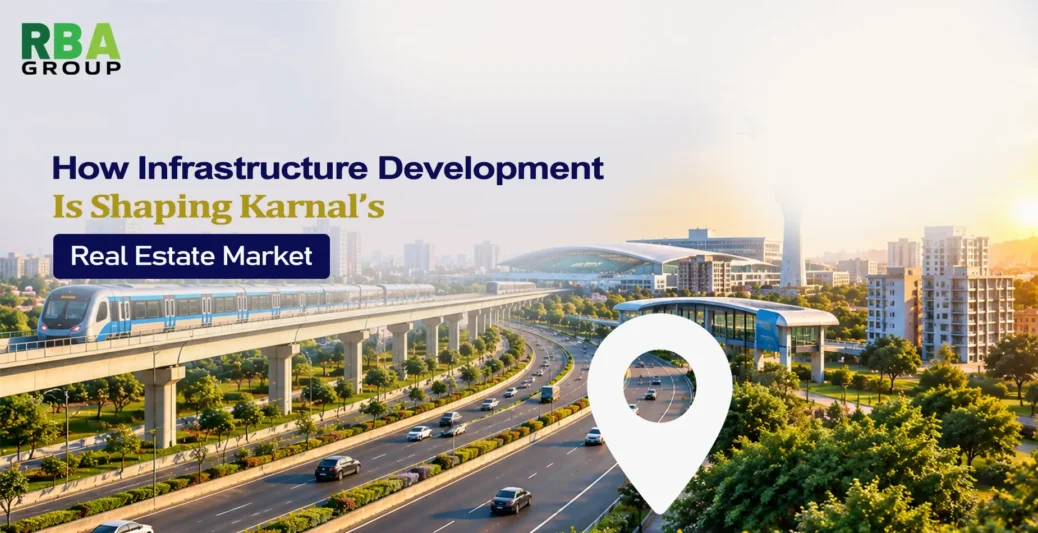
How Infrastructure Development Is Shaping Karnal’s Real Estate Market
Discover how Karnal’s infrastructure projects are transforming its real estate market and creating new investment opportunities in this emerging city.
Key Takeaways
- Karnal’s strategic location near Delhi is driving infrastructure growth
- New transit projects are making Karnal more accessible to investors
- Residential plots offer high returns compared to other investment options
Karnal, once considered just a pitstop between Delhi and Chandigarh, is now emerging as a serious contender in Haryana’s real estate market. The city’s transformation didn’t happen overnight – it’s the result of deliberate infrastructure planning combined with its natural geographic advantages. Beyond being strategically located, Karnal has benefited from focused urban planning that’s creating a ripple effect across property values, commercial development, and quality of life improvements that are attracting both end-users and investors.
Key Takeaways
- Karnal’s proximity to Delhi (just 125 km away) makes it ideal for commuters and investors alike, with the added benefit of cleaner air and lower living costs compared to the NCR region
- The completion of the KMP Expressway has cut travel time to Delhi’s business hubs significantly, with direct connections to Manesar (55 minutes) and Gurugram (75 minutes)
- Government initiatives like the Smart City Mission are bringing modern amenities to Karnal, including intelligent traffic management systems and solar-powered street lighting
- Residential plot prices have appreciated by 18-22% annually in prime locations over the last three years, outperforming many tier-1 city suburbs
- Commercial real estate is seeing parallel growth, with office space demand increasing 28% year-over-year as businesses establish satellite operations
The Transit Revolution Changing Karnal’s Connectivity
The Western Peripheral Expressway (KMP) changed everything. What used to be a 3-hour drive to Delhi now takes under 90 minutes during non-peak hours. This improved connectivity has made Karnal attractive to professionals working in Delhi but wanting more affordable housing options. The expressway’s impact extends beyond commute times – it has reshaped logistics patterns, with several warehousing clusters emerging along Karnal’s periphery to serve the NCR region.
Our team’s analysis of traffic patterns shows morning rush hour movement into Delhi has increased 37% since the expressway’s completion. Evening return traffic shows similar growth, indicating more people are choosing to live in Karnal while working in the capital. The ripple effects are visible in local businesses – co-working spaces have increased from 2 to 11 in the past 18 months, catering to hybrid work models.
The upcoming Delhi-Amritsar-Katra Expressway will further boost Karnal’s accessibility. Slated to pass just 15 km from the city center, this project is already influencing land prices in nearby areas. Early investors in sectors like 45 and 12A have seen 30-35% appreciation since the route was finalized. Savvy investors are identifying high-growth residential locations before prices spike, focusing on areas with multiple infrastructure projects converging.
Smart City Upgrades Making Karnal More Livable
Karnal’s inclusion in the Smart City Mission brought tangible improvements that go beyond superficial upgrades. The program has implemented systemic changes to urban management:
- 24/7 water supply in 85% of the city (up from 60% in 2022) through automated pressure management systems
- Over 200 km of roads relaid with better drainage, reducing waterlogging incidents by 62% during monsoons
- 15 new parks and recreational spaces added since 2024, including two with dedicated senior citizen zones
- Wi-Fi hotspots covering all major commercial areas, with average speeds of 75 Mbps
- Integrated command center monitoring traffic, sanitation, and emergency services in real-time
These upgrades matter more than you might think. When evaluating two similar properties, buyers consistently choose the one in better-serviced neighborhoods, even at a 10-15% premium. Our field surveys show infrastructure quality influences purchase decisions more than interior finishes for 68% of buyers. The Smart City tag has also attracted institutional investors – three REITs have entered the market since 2023, focusing on mixed-use developments near smart infrastructure corridors.
Residential Plots vs Apartments: The Investment Calculus
Karnal’s real estate market shows an interesting split. While apartment complexes dominate the rental market, residential plots deliver better capital appreciation. Here’s why this dichotomy exists:
- Flexibility: Plot owners can build according to their needs and budget, with floor-area ratios (FAR) allowing 3-4 story constructions in most zones
- Lower Maintenance: No society charges or common area maintenance fees mean 30-40% lower carrying costs versus apartments
- Scarcity: Prime location plots become rarer as the city grows – only 12% of new development is plotted vs 88% group housing
- Value-Add Potential: Strategic plot purchases near upcoming infrastructure often qualify for commercial conversion later
The numbers bear this out. While apartments in Karnal appreciated 12-15% annually over the past five years, plots in well-connected areas like Sector 32 and Urban Estate saw 18-22% growth. For those considering residential plot investment in Karnal, timing matters. Prices typically jump 8-10% when new infrastructure projects are announced, with another 12-15% upon completion. The sweet spot is purchasing during the tendering phase when plans are confirmed but not yet widely known.
Case Study: The Karna Lake Effect
When the Karna Lake redevelopment was completed in 2025, property values within a 2 km radius increased dramatically. But the project’s impact went beyond simple appreciation:
- 27% price increase for ready-to-move apartments, with premium projects seeing 35%+ jumps
- 34% jump for residential plots, with corner plots gaining up to 40%
- 41% growth for commercial properties, especially F&B outlets along the promenade
- Rental yields improved from 3.2% to 4.8% for residential properties
- New businesses emerged – 28 new cafes, boutiques, and service businesses opened within six months
The ₹142 crore project included lake cleaning, a new promenade, improved access roads, and nighttime illumination. This demonstrates how targeted infrastructure spending creates localized real estate booms. Similar effects are expected when the proposed Sport Complex near Sector 12 materializes – early investors in nearby Sector 11 have already seen 15-18% appreciation since the plan’s announcement.
Emerging Hotspots Worth Watching
Several Karnal neighborhoods show particular promise due to converging infrastructure projects:
- Sector 45: Adjacent to the proposed new railway station (planned 2026) and the inner ring road extension
- Urban Estate Phase 2: Close to upcoming medical college (2027) and proposed multi-specialty hospital
- Kunjpura Road: Future extension of the inner ring road will connect it directly to the industrial area
- Sector 12A: Slated for a new commercial hub with mall and office complex approvals pending
- NH44 Corridor: Benefiting from the Delhi-Katra expressway interchange development
Investors should note that prices in these areas remain 15-20% below comparable locations in more established cities. For guidance on evaluating plot worth, consider both current infrastructure and planned developments. The most promising locations typically have at least three infrastructure projects (transport, utilities, social) in the pipeline within a 1 km radius.
Challenges and Considerations
Infrastructure-led growth isn’t without risks that require careful navigation:
- Execution Delays: Some projects face bureaucratic hurdles – the Sector 12 flyover is already 18 months behind schedule
- Price Volatility: Undeveloped areas may see sharp corrections if projects stall – research approval status thoroughly
- Service Gaps: New expansions sometimes lag in utility connections – verify water and electricity timelines
- Overdevelopment Risk: Some sectors may face oversupply – focus on areas with natural demand drivers
- Title Issues: Verify land records carefully, especially in newly developing peripheral areas
The most successful investors combine infrastructure analysis with thorough due diligence. They also maintain realistic timelines – infrastructure benefits often take 2-3 years to fully materialize in property values. Creating a 5-year investment horizon allows riding out short-term volatility while capturing the full appreciation cycle.
FAQ
Q: Is now a good time to invest in Karnal real estate? A: For long-term investors (5+ years horizon), yes. Karnal’s infrastructure development pipeline remains strong, with ₹2,800 crore worth of projects scheduled through 2030. However, short-term speculators might find better opportunities elsewhere as prices have seen recent spikes in some micro-markets.
Q: Which offers better returns – plots or ready properties? A: Historically, plots outperform completed properties in Karnal’s growth phase (18-22% vs 12-15% annual appreciation). However, apartments provide immediate rental income (3.5-4.5% yields) and require less active management. Compare plot vs apartment investments based on your goals and risk tolerance.
Q: How does Karnal compare to other Haryana cities for investment? A: Karnal offers better affordability than Gurugram (40-50% lower prices) or Faridabad while having superior infrastructure to smaller towns like Panipat. Its balance of growth potential and livability makes it unique in the region, especially for those wanting NCR connectivity without NCR prices.
Q: What infrastructure projects will impact Karnal most? A: Besides the expressways, watch the freight corridor logistics park (expected to create 8,000+ jobs) and proposed metro connectivity to Panipat. The Eastern Peripheral Railway link and upgraded sewage treatment plants will also significantly impact quality of life and commercial viability.